Blog
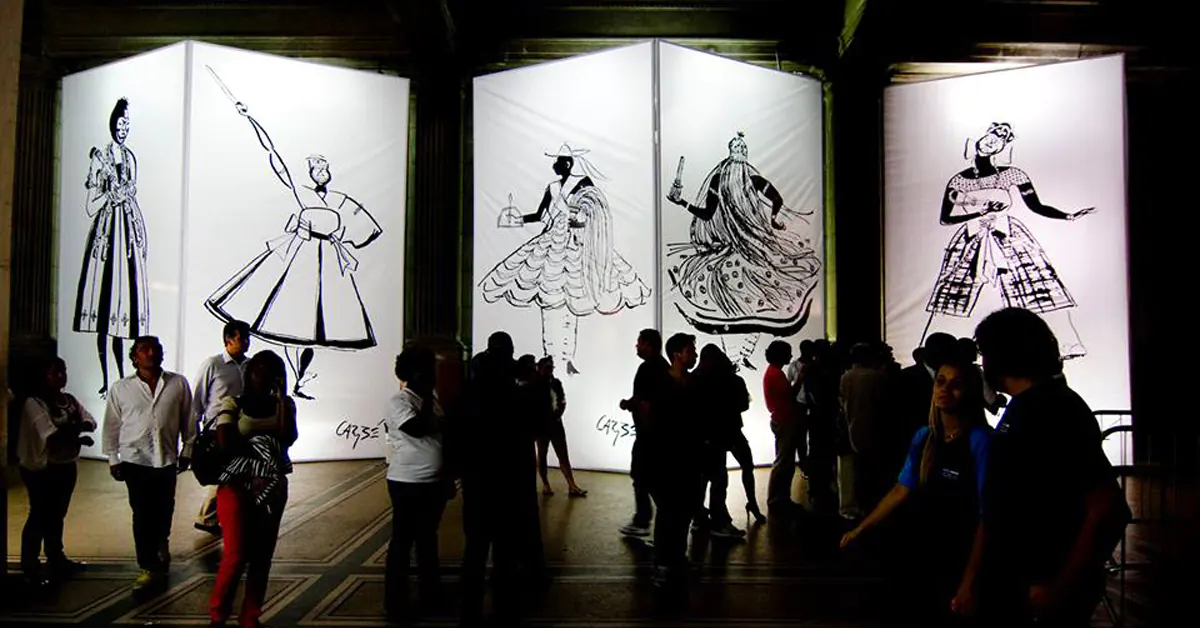
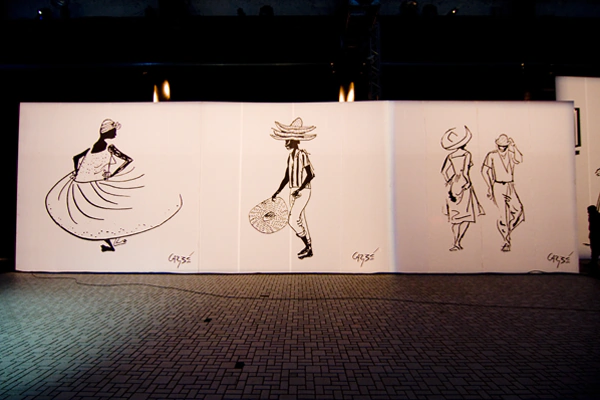
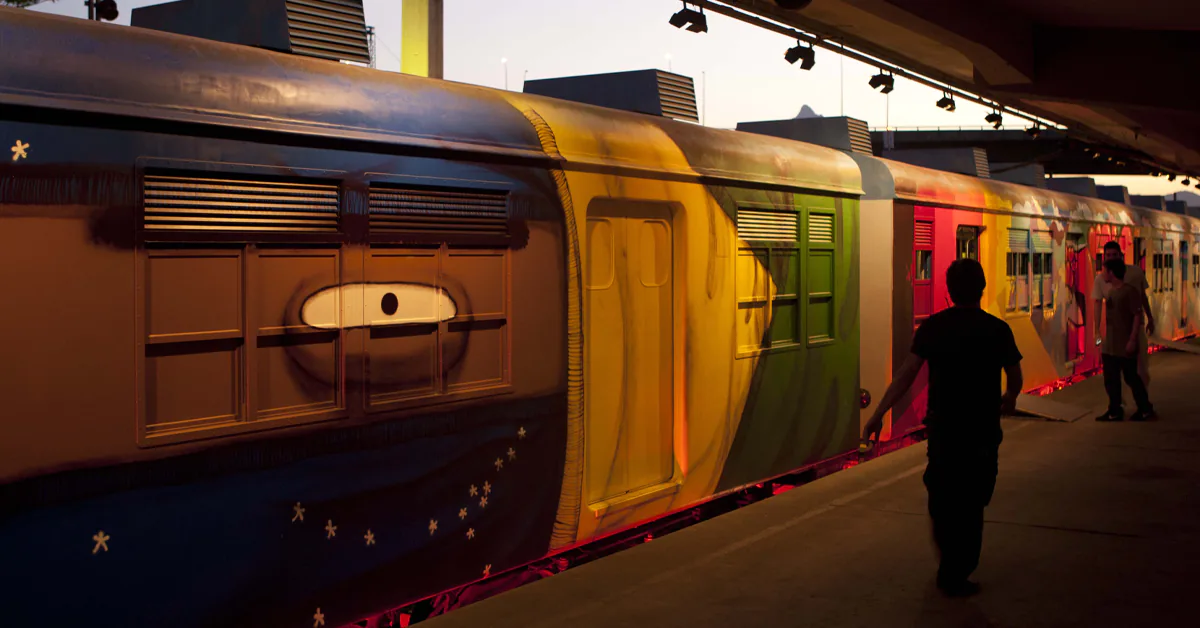
Back2Black has always been a beacon and a showcase — more than a stage, it is a territory where Black culture does not simply present itself: it asserts itself. By bringing Carybé’s panels to the heart of Estação Leopoldina in 2012, the curators weren’t choosing scenography; they were summoning presences. There, lines and colors evoked candomblé and Bahia, creating an atmosphere where ancestry walked alongside every visitor.
Bahia — cradle of candomblé and so many Afro-Brazilian expressions — has long lived a paradox: an exuberant cultural vitality coexisting with the prejudice that tried to silence its traditions. It was within this environment that Carybé came into his own. He observed markets, rituals, popular celebrations — and transformed them into visual language. At Back2Black, his panels reappeared as an insubordinate force: orixás, festivities, and symbols emerging as living memory, binding past and present.
The artist once said that he chose to depict candomblé simply because he liked it: “It is the best religion… the gods are the rivers, the sea, the wind, the rain, the rainbow.” He added, “I documented honestly what I saw and lived.” These words echoed throughout the festival’s scenography, revealing that each of his lines is a testimony — not of distant observation, but of coexistence and respect.
Inside Estação Leopoldina, his panels created a sensorial territory. The audience didn’t merely look at them: they were moved and crossed by Bahian memory and by the aesthetic power of a tradition that has spent centuries fighting to occupy the center of the stage. Carybé’s art did not decorate the space; it turned it into a manifesto.
By integrating these works, Back2Black reaffirmed its purpose: to celebrate Black culture, amplify voices, and restore centrality to what has so often been marginalized. In the orixás, in the gestures, in the colors, Carybé’s work became a standard — proof that art is also a place of belonging, affirmation, and continuity.