Blog
In the third edition of Back2Black, in 2011, the Estação Leopoldina ceased to be just an abandoned warehouse reclaimed by music: it became a living canvas for the dreamlike strokes of Otávio and Gustavo Pandolfo — the brothers the world came to know as Os Gêmeos. For the first time, the festival welcomed a scenography entirely conceived by artists born of the street, of spray paint, of concrete. The gesture went beyond aesthetics. Bringing the language of graffiti into the architecture of a festival dedicated to the Black diaspora and its contemporary resonances was not decoration: it was the inscription of marginal art at the heart of a celebration that has always sought to confront hierarchies and decolonize the gaze.
The installations, vast and colorful, did not serve as a backdrop — they were atmosphere. The festival became a parallel city, where Black ancestry and urban imagination pulsed to the same rhythm.
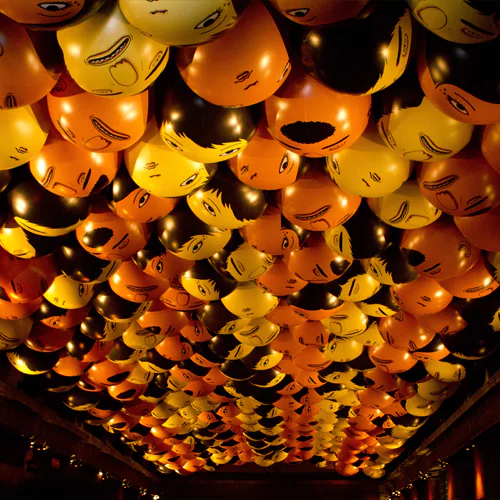
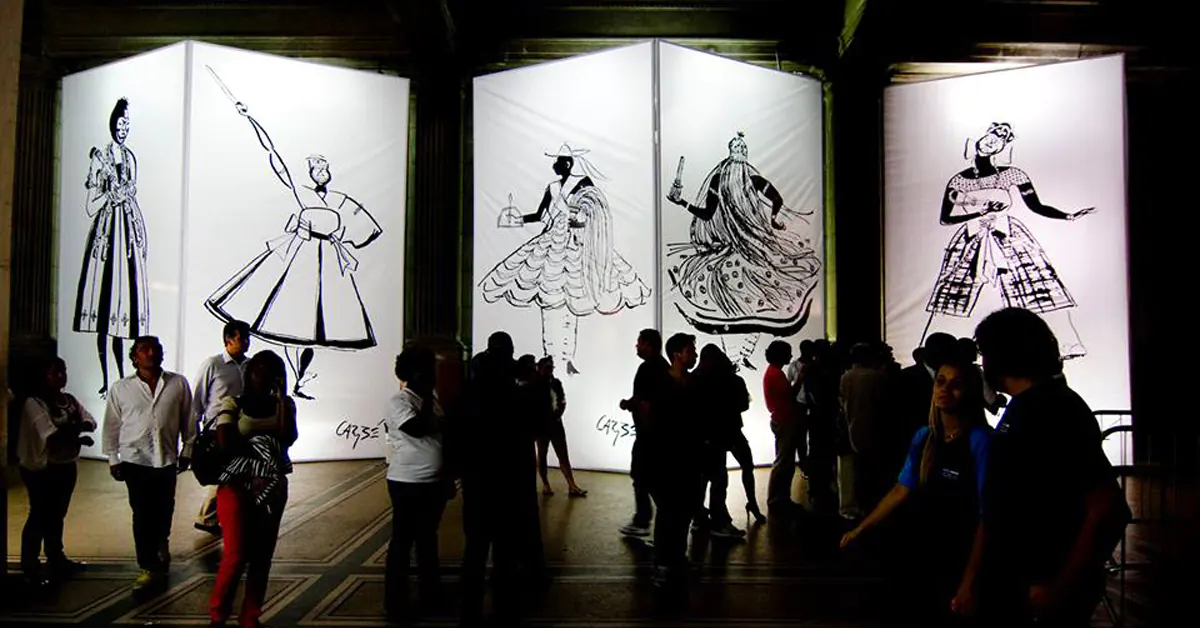
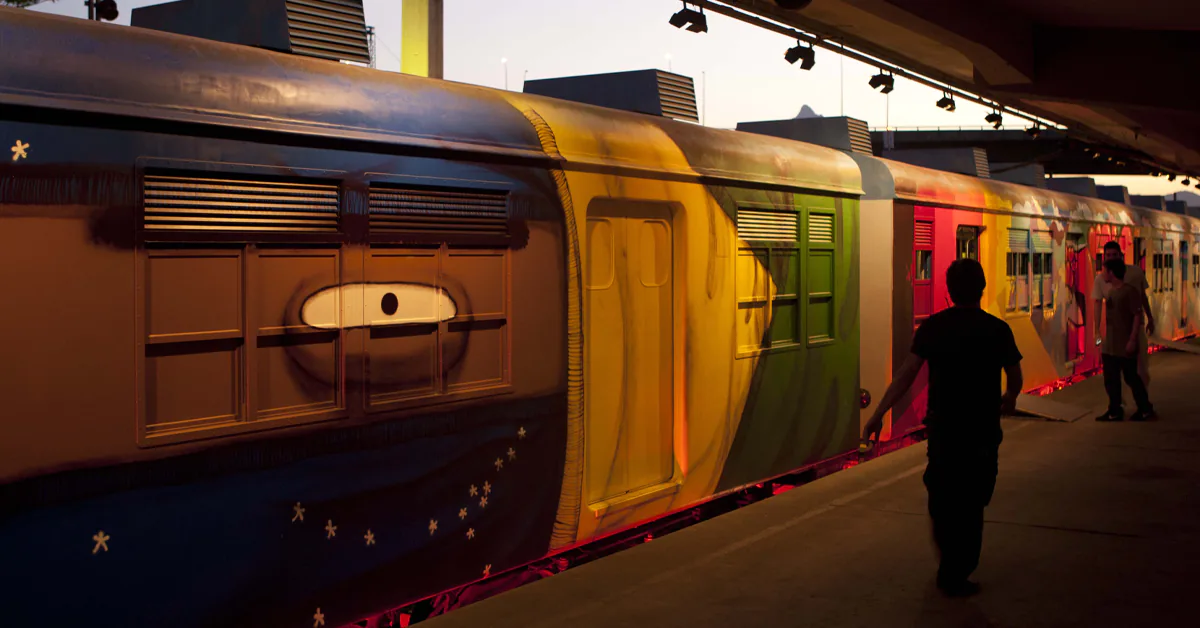
The epicenter of the intervention was the installation of the inflatables — the iconic yellow and orange balloon heads — which hovered over the audience like constellations of watchful faces. Around them, painted trains and large panels expanded the duo’s familiar universe: elongated figures, unmistakable lines, and a palette that transformed iron and brick into pure visual fiction. In images from that time, the public is not merely observing but moving through the work, traversing it and being traversed by it.
More than spectacle, that scenography functioned as a political act. By bringing to Leopoldina an aesthetic born in the periphery, Os Gêmeos placed urban art side by side with Black music, reaffirming Back2Black as a space of visibility and empowerment. Their intervention asserted that to occupy a space publicly — with color, form, and imagination — is also to define an identity: a painting that names, that opens pathways of recognition, and that transforms the festival into a scene of collective belonging.
In the artists’ own words:
“Taking part in Back2Black in 2011 was very special because we had a lot of freedom to create the art direction. The project took place in the old Leopoldina station in Rio de Janeiro, where we developed an installation with inflatables on the station’s ceiling. It took some time to be completed, both in the creative process and in the development of the inflatables. But it was incredibly rewarding to take part and see the final result, to be present during the festival and witness the dialogue between the artists performing and our work installed in the station. It was a unique installation, and to this day we have wonderful memories from those days.