Blog
The Back2Black Festival was founded with the mission of reaffirming Africa as the cradle of civilization and celebrating the continent as a vibrant center of political thought, cultural innovation, and new narratives.
In doing so, it accomplished something unprecedented in Brazil: positioning high-impact intellectual conferences as a core component of a cultural and music event. Over time, Back2Black has established itself as a benchmark for transatlantic dialogue, nurturing Afro-Brazilian knowledge systems and cultures through genuine, lasting exchanges of invaluable contribution to future generations.
>> 2009 — Inaugural Edition: At its debut in 2009, held at the historic Estação Leopoldina in downtown Rio de Janeiro, and curated by Angolan writer José Eduardo Agualusa, the festival promoted landmark encounters, including:
- “Building Utopias”, featuring humanist and Live Aid founder Bob Geldof alongside South African writer Breyten Breytenbach, a leading figure in the anti-apartheid struggle.
- “Africa in the Construction of the World”, with Graça Machel (former First Lady of Mozambique and widow of Nelson Mandela), singer and composer Gilberto Gil, Zambian economist Dambisa Moyo—named by TIME magazine as one of the 100 most influential people in the world—and Africanist scholar Alberto da Costa e Silva.
>> 2010 — Expanding the Dialogue: In 2010, the festival expanded its scope to themes connecting politics, society, creativity, and contemporary thought. Highlights included:
- “Human Rights and Civil Society”, with Joyce Banda (then President of Malawi), Nigerian writer and activist Chris Abani, anthropologist Rubem César Fernandes, and Bahian architect and cultural producer Zulu Araújo.
- “Creativity”, bringing together multi-artist Dave Stewart, visual artist Vik Muniz, and South African poet, musician, and actor Zola, moderated by writer and historian Heloisa Buarque de Hollanda.
- “Literature, Image, and Sound”, with writers Mia Couto and José Eduardo Agualusa, and filmmakers Cacá Diegues and Rui Guerra.
>> 2012 — London and Brazil: In 2012, the festival premiered in London, reinforcing its role as a bridge between Africa and Brazil. Discussions addressed Afro-entrepreneurship, identity, cultural policy, and emerging intercontinental dialogues, welcoming leading voices from Africa and the diaspora, including Nigerian writer and essayist Chimamanda Ngozi Adichie, Franco-Moroccan novelist and poet Tahar Ben Jelloun, Gilberto Gil, and South African musician Hugh Masekela.
That same year, the Brazilian edition’s intellectual program brought together essential figures from literature, music, and Afro-diasporic thought in conferences such as:
- “The Place of Women in Literature in Africa, Cuba, and Brazil”, with Paulina Chiziane—the first woman to publish a novel in Mozambique and the first African woman to receive the Camões Prize—Cuban writer Karla Suárez, and Ana Maria Gonçalves, the first Black woman to join the Brazilian Academy of Letters.
- “The Origins of Samba and Its Presence in Brazilian Literature”, with composers Nei Lopes and Martinho da Vila, and writer Paulo Lins.
- “Relations Between Africa and Brazil and the Role of Music in the Fight Against Apartheid and Racism”, with musician Hugh Masekela and Cuban writer, researcher, and social scientist Carlos Moore, PhD in Human Sciences and Ethnology from the University of Paris.
>> 2013 — Cidade das Artes: In its 6th edition, Back2Black inaugurated a new venue—the Cidade das Artes in Barra da Tijuca—and welcomed thinkers, artists, and political leaders in conversations that expanded essential debates on Africa, the diaspora, and contemporary creation:
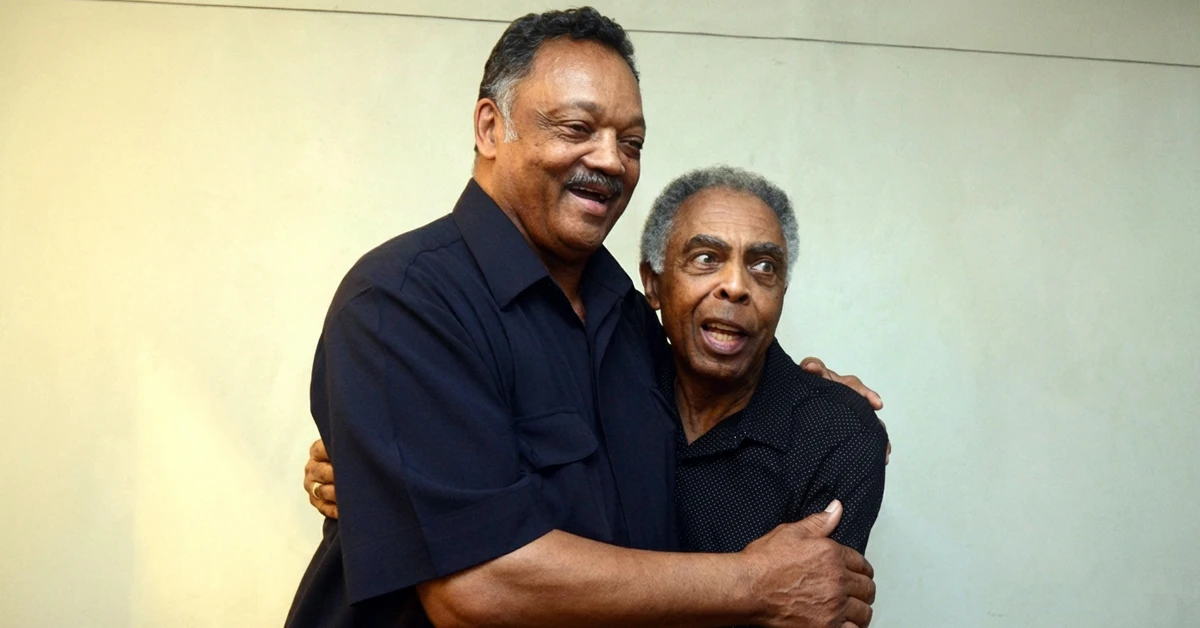
- “Democratization and the Development of Africa”, with Gilberto Gil and Reverend Jesse Jackson—Baptist minister and central figure in the U.S. Civil Rights Movement alongside Martin Luther King Jr.—moderated by José Eduardo Agualusa.
- “Tradition in the Modern World”, with South African visual artist Esther Mahlangu, the most renowned traditional artist of the Ndebele people, and Soba Bernardo Mussonde (Mukubal/Angola), a traditional authority representing a nomadic people of southern Angola who have preserved their traditions for centuries. Moderated by José Eduardo Agualusa.
- “New Afro-Brazilian Playwriting”, with actor and director Guti Fraga (founder of the group Nós do Morro), actress Zezé Motta, and director and playwright Márcio Meirelles (creator of Bando de Teatro Olodum), moderated by writer Paulo Lins.
That year, the festival also screened the documentary “Hereros Angola”, by Sérgio Guerra, about the Herero people of southwestern Angola and their ancestral oral traditions.
>> 2015 — Identity and Urban Languages: In 2015, the festival presented fundamental debates on identity, territory, and urban languages, including:
- “Literature in a Conflict-Ridden Africa”, with Congolese writer Alain Mabanckou and Djiboutian novelist, poet, and essayist Abdourahman Waberi.
- “Blackness and the Invention of Rio”, with writers Nei Lopes and Ruy Castro.
- A conversation with Brazilian anthropologist, poet, essayist, and historian Antônio Risério on identity, memory, diaspora, and colonialism.
- “Kuduro and the Language of the Peripheries”, with Kalaf Angelo and José Eduardo Agualusa.
The edition also featured the screening of the documentary “I Love Kuduro”, directed by Mário Patrocínio, and the presentation of Amnesty International’s Young Black Lives campaign.
>> 2016 — Generations and New Voices: In 2016, the festival brought together generations and aesthetics of the Black diaspora alongside emerging voices of Black Brazilian music through a lecture and a performance created especially for the festival.
Under the theme “Culture and Black Empowerment”, the show “Nós por Nós” was directed by Rafael Dragaud, with musical direction by Rafael Mike, and featured Daúde, Lellêzinha (Dream Team do Passinho), Deize Tigrona, Tássia Reis, Rico Dalasam, and MC Linn da Quebrada.
>> 2019 — 10-Year Anniversary
In 2019, Back2Black celebrated its 10th anniversary at a new venue—the Armazém da Utopia, in Rio’s port district of Gamboa. The festival presented scenic and poetic interventions with special appearances by actress Dira Paes, reading texts on the myth of baobabs as Trees of Life, and ciranda singer Lia de Itamaracá, celebrating ancestry, Afrofuturism, and global Black culture.
>> 2023 — Return and Renewal
In 2023, after the pandemic-induced hiatus, Back2Black returned in its 11th edition, celebrating the 60th anniversary of Africa Day and reaffirming its vocation for encounter, reflection, and celebration.
The intellectual program, titled “Diálogos de Pret’Upias”, featured gatherings of strong political and imaginative power, including:
“Afro-Atlantic Dialogues”, with artist Dino d’Santiago, Angolan musician, writer, and poet Kalaf Epalanga, and Brazilian journalist and writer Eliana Alves Cruz.
“Portraits of Africa”, with artist Mateus Aleluia and Nobel Laureate Wole Soyinka.
“A Look at the Future of the World from a Black and Feminine Perspective”, with writer Conceição Evaristo, educator and researcher Sinara Rúbia, actress Zezé Motta, and social activist Camila Moradia, moderated by historian Carolina Morais.
>> 2023 — Rio Innovation Week: Later that same year, Back2Black partnered with Rio Innovation Week for a singular edition featuring dozens of conferences and talks, including:
- “Understanding Brazil”, with Martinho da Vila.
- “A Look at the Future from a Black and Gender Perspective”, with federal congresswoman Erika Hilton and singer-songwriter Raquel Virgínia.
- “Structural or Institutional Racism?”, with Carla Akotirene and philosopher Katiuscia Ribeiro.
- “Innovation in Cultural Management – The Power of the Peripheries”, with Aline Torres and Pâmela Carvalho.
- “Narrative, Poetry, Everyday Life, and the Future”, with filmmaker Rodrigo França and philosopher Renato Nogueira.
- “How Can Literature Prepare Us for the Future?”, with writers José Eduardo Agualusa and Marcial Gala.
- “Ancestrality as a Path Toward a Sustainable and Equitable Future”, with historian and writer Jonathan Raimundo.
In the words of Connie Lopes, Founder and Executive Director of B2B: “Back2Black is the materialization of a creative and contemporary movement that revisits the past in order to imagine a less unequal and more innovative future. The continent that was the cradle of humanity is once again shaping our future.”