Blog
Back2Black: Style and Hairstyles as Imagetic and Political Power
Back2Black style and hairstyles reveal how fashion and aesthetics become imagetic and political power within Black culture and identity.
- Back2Black
- Style
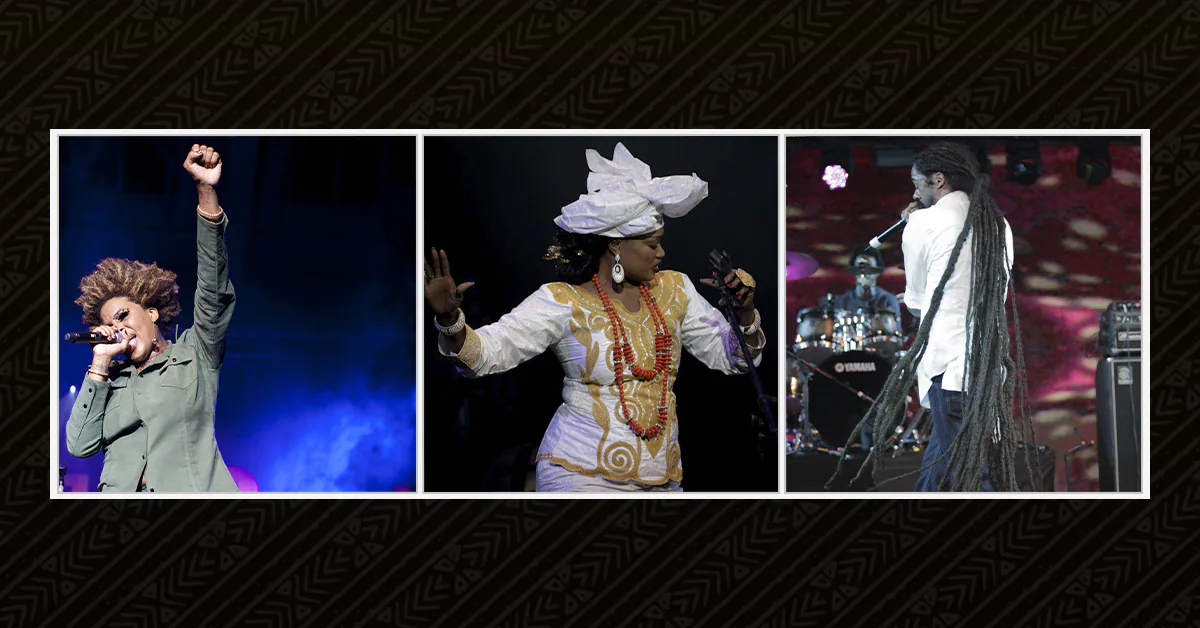
There is an untamed force that pulses between the roots and the tips of Black hair. It is neither fashion nor ornament: it is living politics, ancestry in motion, desire, affirmation, and resistance. Each hairstyle — from majestic afros to braids, from Bantu knots to Fulani braids — carries stories inscribed on bodies, crossing streets and igniting stages, screens, and the collective imagination of global Black culture.
On the Back2Black Festival stage, style and attitude do not merely walk side by side — they confront, enchant, and claim space.
In 2010, Erykah Badu appeared with short, platinum-blonde hair, breaking expectations and reaffirming, through aesthetic disobedience, her absolute freedom.
In 2011, Malian singer Oumou Sangaré shone wearing an imposing African headwrap, while the Tuareg group Tinariwen brought the nomadic wisdom of the Sahara: faces almost entirely covered in fabric, leaving only the eyes as windows into a millennia-old ancestry.
The festival has always understood that aesthetics are identity — and that identity is power.
In 2016, Grace Jones appeared like a lightning strike: short hair, tribal body paint, exuberant accessories, and a body transformed into a manifesto. Her mere presence was seismic. Aesthetics and empowerment collided, producing a visual and political explosion that marked the festival’s history.
During the 2013 tribute to Miriam Makeba, every hairstyle carried memory and resistance, reminding us that Black hair is never neutral.
And in 2023, IZA, Tiwa Savage, and Agnes Nunes stepped onto the stage reaffirming what Back2Black has always known: Afro aesthetics are now a global cry of strength, voice, and dignity.
Every artist who passed through Back2Black wore their origins like a crown. Braids, headwraps, afros, strands lifted toward the sky — everything exuded ancestry. Hair is not an accessory: it is heritage. It is code. It is territory.
The legacy of Back2Black also vibrates through the hairstyles that transformed stage and audience into an arena of Black affirmation. These hairstyles told what history tried to conceal, declared race, denounced erasure, and produced presence. They were crowns that lifted crowds, signaled belonging, and showed — without asking permission — that Afro aesthetics are politics, art, and resistance.